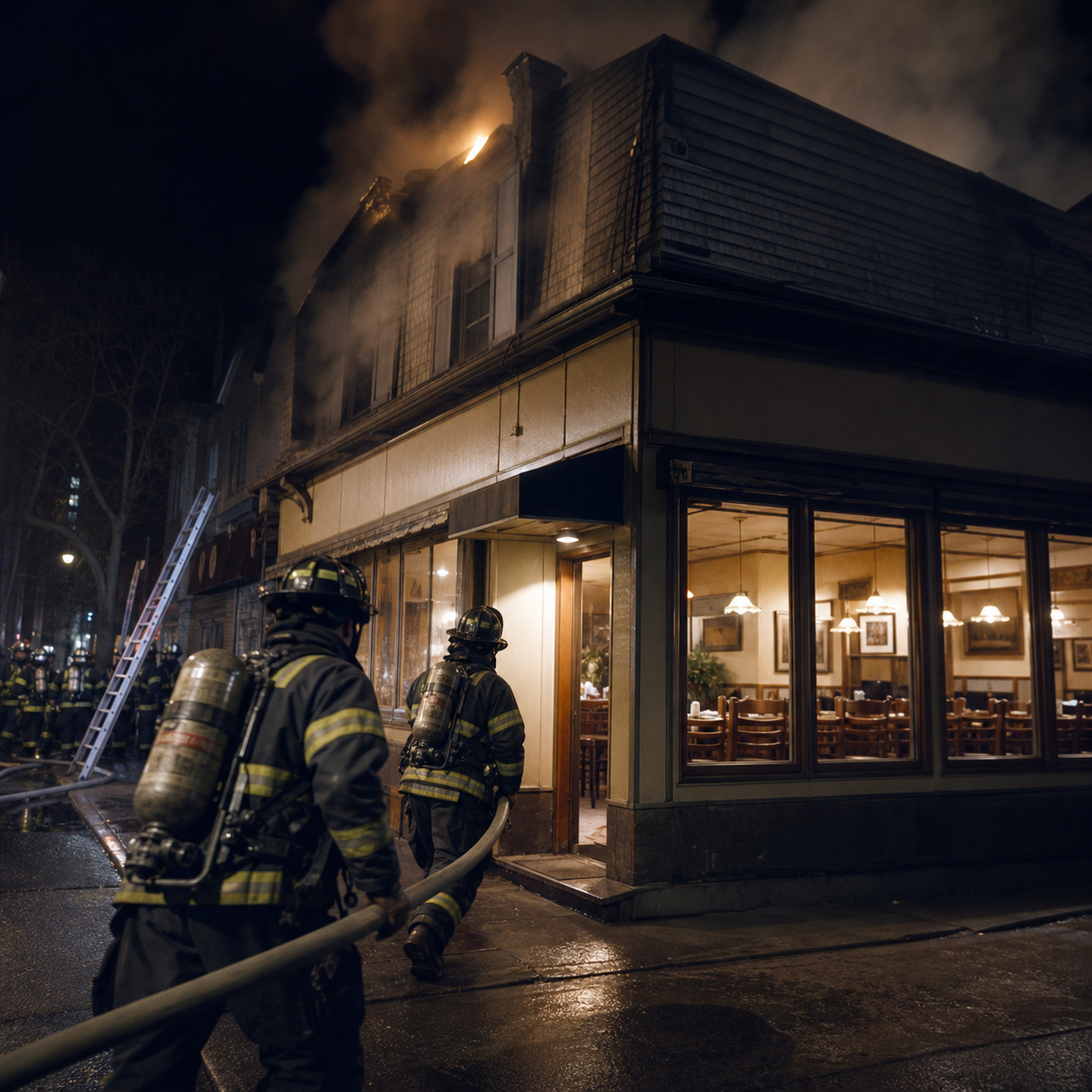
From the WTF Watch Desk: On August 29, 2007, two Boston firefighters died during an interior attack on a restaurant cockloft fire. Fire was visible through the roof, yet conditions in the dining area initially included little smoke or heat.
Approximately five minutes after the first crew arrived, a rapid fire event occurred. NIOSH later identified problems involving command, communications, tactics, crew integrity, delayed rapid-intervention-team establishment, building-code issues and personal protective equipment.
The anniversary is not an invitation to relitigate a tragedy from a distance. It is a reason to put concealed commercial spaces, kitchen exhaust systems and conflicting interior-exterior cues back on the drill board.
Why this deserves the fire service’s attention
A comfortable room beneath a suspended ceiling can be separated by only inches from a large, ventilation-limited fire. Exterior roof conditions, thermal imaging and early opening of concealed spaces must influence the interior plan.
NIOSH emphasized a charged attack line, a staffed backup line protecting egress, coordinated ventilation and an immediately available RIT. Those defenses work as a system; delay in one can narrow options for everyone inside.
What Worked?
The available findings do not justify identifying a meaningful operational success from this fatal event.
What Didn’t Work?
Multiple command, communication, tactical and protective-system defenses failed or were delayed.
What Was Missed?
The investigation emphasized early opening of concealed spaces, TIC use, a charged attack line, a staffed backup line protecting egress, coordinated ventilation and an immediately available RIT.
Work • Train • Finish
Make exterior roof conditions and concealed-space indicators part of the interior crew’s ongoing size-up, not information that stays at command.
Run a restaurant cockloft drill where the dining room feels tenable while roof reports and TIC findings show a growing overhead problem.
Anniversary training should honor the members by improving the system, not by reducing their deaths to slogans or blame.
The complete NIOSH investigation should remain the primary training source. Read the findings before compressing the event into a company drill.