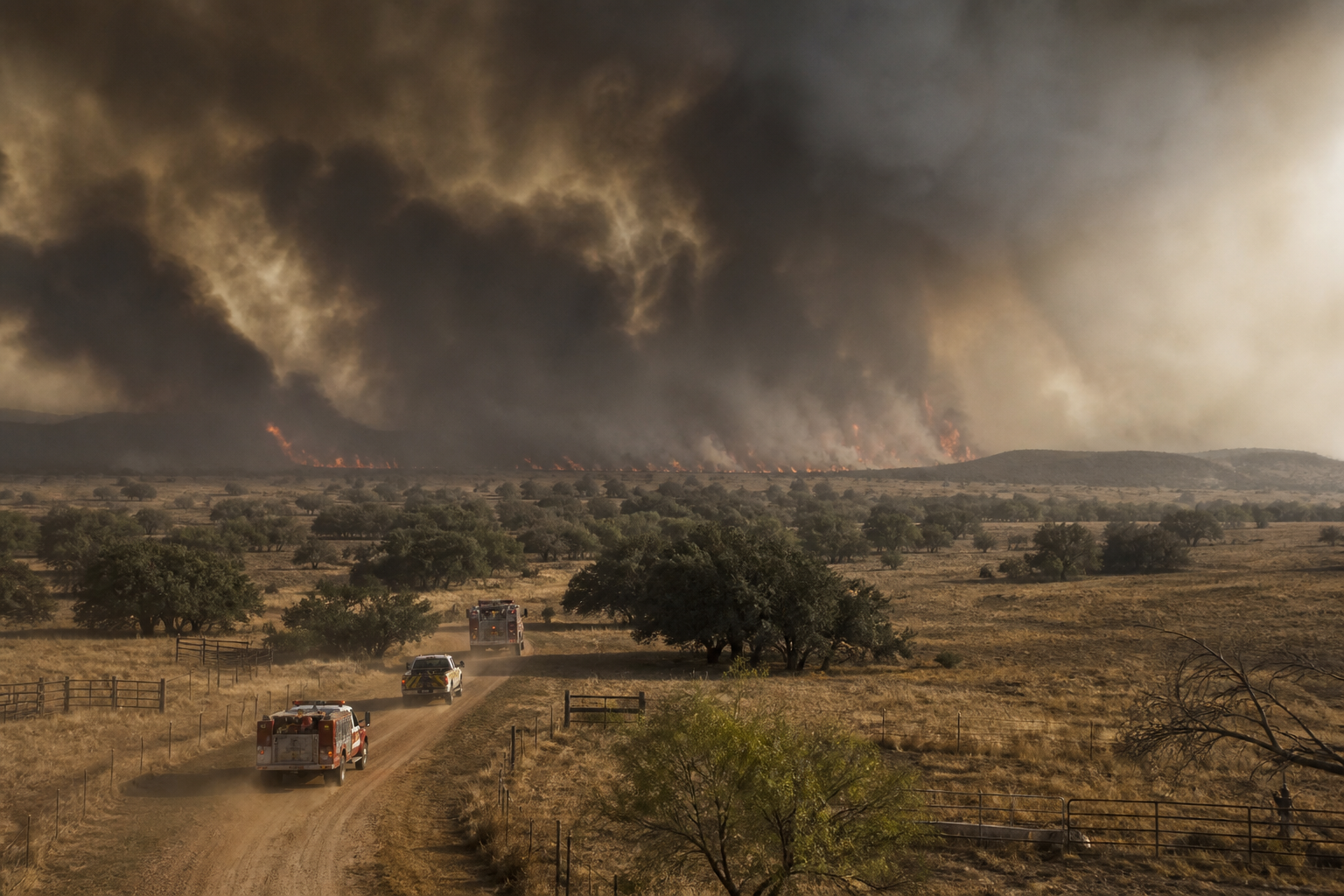
From the WTF Watch Desk: The Ross Fire expanded to approximately 80,000 acres and 12 percent containment by Wednesday morning across Palo Pinto and Jack counties in north-central Texas.
The fire began Monday afternoon and moved with extraordinary speed through hot, dry and wind-exposed ranch country. More than 1,000 residents were evacuated. Schools closed, livestock sheltering was organized and state, local, federal and out-of-state resources joined the response.
Texas officials listed large and single-engine air tankers, scoopers, helicopters, air-attack platforms, bulldozers and motor graders among the resources committed. Federal Fire Management Assistance Grant funding was approved as homes, infrastructure, farms and ranches remained threatened.
At least five structures had been reported destroyed in early assessments. That number should not be treated as final while the fire remains active and access is limited.
Why this deserves the fire service’s attention
The acreage is dramatic, but the operational story is resource scale across sparse country: long travel distances, limited water, livestock movement, fast-changing evacuations and structure protection spread across two counties.
Texas A&M Forest Service reported 17 assistance requests involving more than 52,000 acres statewide in the preceding operational period. The Ross Fire is therefore not operating in isolation; managers must protect local initial-attack capability while feeding a growing campaign.
Rural evacuation plans also need animal movement, accessible shelter, road capacity and residents who may delay leaving to protect livelihoods. Those are predictable planning problems, not side issues after the fire arrives.
What Worked?
Evacuation centers, livestock sheltering, state and federal assistance, aviation resources and heavy equipment were mobilized rapidly as the fire expanded.
What Didn’t Work?
The fire outran early containment efforts and damaged structures. Current facts do not establish an individual or tactical failure.
What Was Missed?
The confirmed cause, final structure and livestock losses, exact evacuation timeline, responder injuries and complete containment strategy remain developing.
Work • Train • Finish
Treat rural evacuation, livestock movement, road control, water supply and structure triage as one coordinated operational problem.
Tabletop a fast-moving ranchland fire that crosses county lines while statewide wildfire demand is already elevated.
Track fatigue and responder-family needs through the campaign. Rural volunteers may be protecting the same homes, livestock and livelihoods their own families depend on.
This is a developing report. Acreage, containment, damage and evacuation figures can change quickly and should be checked against incident authorities.